 Adrià FranchandClaude Fable 5.1
4aafda8e3b
A graphics pipeline the store builds or a compute pipeline a dispatch builds is
appended to pipelines.journal next to the shader cache entries, as the
materialized result of each stage (the specialized SPIR-V, bindings and push
constants) plus the recipe the pipeline was built from: the stages'
identities, vertex input layout, descriptor set layout keys and the state
fields the Pipeline constructor reads. When a VulkanDevice is created with a
window (a headless device waits for its first draw or dispatch, since the
window's device usually replaces it first) the journal is loaded and its
pipelines are built on a pool of threads while the title loads, so the first
draw or dispatch of a configuration seen on an earlier run finds its pipeline
resident instead of compiling it on the queue worker.

The pipeline stores key on RecompileResult::Identity, a hash of the module
words, specialization constants, subgroup width and bindings that is the same
on every run (SharedSpirv::ContentHash, computed once per shared module),
rather than on the process-lifetime variant ids; a generated stage is keyed
like any other. CachedPipeline builds outside the store's mutex and the
library parts and link are built outside the library store's mutex, so replay
threads and queue workers build in parallel; a concurrent build of the same
key keeps the first inserted. A replayed pipeline enters the store at its
least recently used end and a full store takes none, and its optimized relink
waits for the first draw that binds it, so the title's own pipelines come
first in both. The compute pipeline creation moves into
VulkanDevice::createComputePipeline, shared by dispatches and the replay. The
store key also covers the color component mapping, the depth target's sample
count and a depth bias clamp, which the constructor reads.

The file names the device it was written for (the properties the driver's
pipeline cache file is named by) and starts over for another; a torn tail is
cut at a record boundary; two runs sharing the directory take turns on a lock
file and keep each other's records; a read failure never starts the file
over. A device cancels its replay before it is replaced or destroyed, and a
replaced device destroys its pipelines then rather than at the driver's stop.

APS5_NO_PIPELINE_JOURNAL=1 disables it; APS5_PIPELINE_JOURNAL_THREADS,
APS5_PIPELINE_JOURNAL_ENTRIES (the first recorded), APS5_PIPELINE_STORE_ENTRIES
and APS5_PIPELINE_JOURNAL_MAX_MIB bound it; APS5_PROFILE_DRAW prints a
[pipeline-journal] summary. APS5_VERIFY_SET_LAYOUTS=1 now also checks a
dispatch's set layout against the one described from its shader. The lavapipe
test suite, which shares one cache directory, runs with the journal off except
for the journal's own tests.

Co-Authored-By: Claude Fable 5.1 <noreply@anthropic.com>
Claude-Session: https://claude.ai/code/session_01P6hw3kRAuQdfcU9YCZgaoK
About
Tool for automatic executables porting to Linux and Windows.
Web converter - files stay on your device.
Includes a relinker that converts executable to the target system's native format and implementations of system prx libraries suitable for dynamic linking. No emulation or separate runtime process.
Discord, Usage, Build instructions, Architecture, Technical debt of the project, code style conventions, contributing
Status


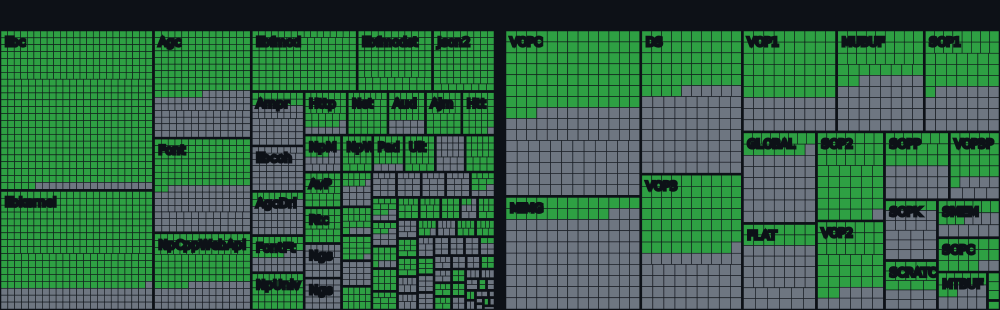
* System libraries: percentage of the functions known to the project so far (declared in core/libs/prx), not of every PS5 system function. The total grows as more functions are declared.
Unsupported or unexpected states strictly throw std::runtime_error. what() is printed to stderr and the process terminates.
The shader recompiler successfully produces SPIR-V (validated via Spirv-Tools when built with ANYPS5_ENABLE_SPIRV_TOOLS).
Compatibility
Per-game progress (stage reached, open blockers, libraries and GPU coverage) is tracked on the blocker map, a community project built from public GitHub data (source). Test reports go in the Game bring-up discussions, one thread per title.
Input mapping
SDL-mapped game controllers are supported, including analog sticks and triggers. Keyboard and mouse controls can be configured with an anyps5-input.ini file. See input mapping for the supported devices and configuration format.
Disclaimer
This project is intended for interoperability, research, preservation, and compatibility purposes. It does not include, distribute, or require copyrighted software, firmware, cryptographic keys, or proprietary libraries. Users are responsible for ensuring that any binaries used with this project are obtained and used in accordance with applicable laws and their respective license terms.
License
This project is licensed under the GNU General Public License version 2 only.