 b42ef24e07
* fix(agc): keep the driver's per-thread scratch out of thread_local teardown

With MinGW's emulated TLS, a thread_local with a destructor in a DLL is
destroyed after its storage is gone: when a std::thread ends, winpthread
runs libgcc's emutls key destructor, which frees the thread's thread_local
storage, and only then does the loader's DLL_THREAD_DETACH run the DLL's
tls_atexit list, so the destructors run on freed memory. The queue worker
touches four of them in libSceAgcDriver (the dispatch-ahead map, the
pending waits, the draw-snapshot compare vectors and the image decode
memo), and Driver::stop's join of the worker then corrupts the heap.
Under cdb's checking heap agc_driver_draw_cache_reuse stopped at the
worker's exit with heap corruption in all 127 runs, with graphics
pipeline libraries, with APS5_NO_PIPELINE_LTO=1 and with APS5_NO_GPL=1.
Without it the damage shows intermittently, as exit 0xc0000374 (2 of 143
runs with a cold NVIDIA shader cache) or as a fault in whatever allocates
next, such as NVIDIA's compiler on the optimized-link thread (#2980).

These objects now live in HostThreadLocal, fiber-local storage that owns
them, as the recorder's buffers do since e424b6b7b.

Co-Authored-By: Claude Opus 5.5 <noreply@anthropic.com>

* fix(libs): keep thread_local objects with destructors out of module teardown

The teardown order behind the driver's heap corruption holds in every
module: with MinGW's emulated TLS a thread's thread_local storage is freed
before the module's DLL_THREAD_DETACH runs its thread_local destructors,
so they run on freed objects. PreciseSleepUs's timer (used, among others,
by the video-out vblank thread) then closes a stale handle; libkernel's
directory path, socket waker and UUID random device, libSceRandom's random
device and libScePosixForWebKit's random device and host lookup free or
close stale objects. They move to HostThreadLocal. The other thread_locals
in the modules are trivially destructible or only built for Linux.

Co-Authored-By: Claude Opus 5.5 <noreply@anthropic.com>

* test(libs): fail when a module registers a thread_local destructor

prx_thread_local_destructors lists the symbols of every built module and,
where MinGW's thread_local destructor support is linked in, disassembles
the module for calls to __cxa_thread_atexit outside libc's registration of
guest destructors. A module that keeps a thread_local with a destructor
fails it with the function that registers one: with main's libSceRandom
it reports sceRandomGetRandomNumber, and with this branch all 122 modules
pass, libc being the only one that links the support.

Co-Authored-By: Claude Opus 5.5 <noreply@anthropic.com>

* fix(agc): keep the image memo behind its pointer

The image decode memo went into HostThreadLocal as the whole array. On
Linux, where HostThreadLocal is a plain thread_local, that put 1024 memo
entries into every thread's TLS block instead of one pointer. It keeps
its unique_ptr as before, now owned by HostThreadLocal, so Linux builds
the same thread_local as main.

Co-Authored-By: Claude Opus 5.5 <noreply@anthropic.com>

---------

Co-authored-by: Claude Opus 5.5 <noreply@anthropic.com>
Co-authored-by: Dean Galvin <dean.galvin@live.com>
About
Tool for automatic executables porting to Linux and Windows.
Includes a relinker that converts executable to the target system's native format and implementations of system prx libraries suitable for dynamic linking. No emulation or separate runtime process.
Usage, Build instructions, Architecture, Technical debt of the project, code style conventions, contributing
Status


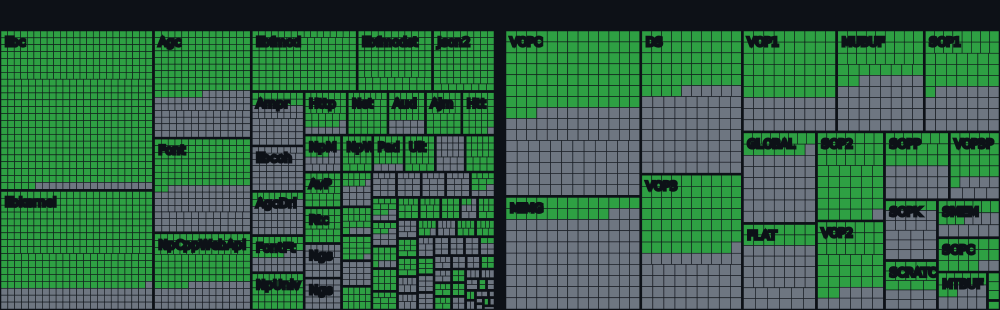
* System libraries: percentage of the functions known to the project so far (declared in core/libs/prx), not of every PS5 system function. The total grows as more functions are declared.
Dreaming Sarah (2D platformer) runs at a stable 60 fps on a GTX 1050 Ti / i5-7500 3.4GHz.
Unsupported or unexpected states strictly throw std::runtime_error. what() is printed to stderr and the process terminates.
The shader recompiler successfully produces SPIR-V (validated via Spirv-Tools when built with ANYPS5_ENABLE_SPIRV_TOOLS).
Compatibility
See the game compatibility list for tested games and known issues.
Input mapping
SDL-mapped game controllers are supported, including analog sticks and triggers. Keyboard and mouse controls can be configured with an anyps5-input.ini file. See input mapping for the supported devices and configuration format.
Disclaimer
This project is intended for interoperability, research, preservation, and compatibility purposes. It does not include, distribute, or require copyrighted software, firmware, cryptographic keys, or proprietary libraries. Users are responsible for ensuring that any binaries used with this project are obtained and used in accordance with applicable laws and their respective license terms.
License
This project is licensed under the GNU General Public License version 2 only.