 f6c8e8474f
A CPU read of DISPATCH_INDIRECT arguments waited only through the flush
hook, which waits for the ranges recorded work noted as pending writes.
An address-based store (FLAT/GLOBAL, or through a descriptor the
recompiler cannot resolve to a static buffer) is not recorded as a
pending write: its batch leases the registered allocations, and only the
guest pin waiter finished that batch. So the thread-dimension,
misaligned and disabled paths, the fill-kernel path and the device's CPU
fallback read the arguments from before an address-based producer ran.
GTA V (PPSA04264) dies loading Story on such a read: a 64-thread clear
kernel read {160, 288, 0xffffffff} as thread dimensions
(3x288x4294967295 groups), bytes its 1-thread setup kernel had not yet
overwritten with {n, 1, 1}, and threw "workgroup count
3x288x4294967295 exceeds device limits".

Every CPU read of dispatch arguments at execution now first finishes the
recorder up to the newest batch recorded with a lease
(Graphics::FinishLeaseWork). The group read-ahead still reads without
waiting; a dispatch it resolved is adopted only when the execution-time
read gives the same counts, and one that differs is dropped and counted
in the [groupcap] line. The device limit error names the argument
address and cpuReason, and the driver adds the queue, path and
read-ahead outcome. The [indirect] read time includes the lease wait,
and the [recorder] sync-site table records the offset of
FinishLeaseWork's caller. The CPU reads that still miss address-based
writes (indirect draw arguments and count, the copy kernel's count
record, the awaits-title checks) are listed in the technical debt.

IndirectArgumentsPendingProducer covers the execution-time CPU argument
reads on compute queues and the pending-label CPU fallback in the Vulkan
device. Its sixth case records a real argument label behind a host Vulkan
event in an earlier batch and an address-based producer in the later open
batch. The event releases only after that producer batch is submitted;
a bounded watchdog releases for cleanup but fails the case. It requires
a deferred producer lease, an unsubmitted producer at the argument
decision, cpuReason 2 and the fresh arguments and counter result. Small
valid stale counts keep a broken-wait control finite on every driver.
Exact CPU-reason and watchdog diagnostics identify the failing path. This
replaces a spinning workload whose earlier label could retire before
the fallback decision on lavapipe, allowing a false green with cpuReason 0.

Co-Authored-By: Claude Opus 5.5 <noreply@anthropic.com>
Co-Authored-By: Codex <noreply@openai.com>
About
Tool for automatic executables porting to Linux and Windows.
The relinker-only build runs on macOS, including Apple silicon.
Web converter - files stay on your device.
Includes a relinker that converts executable to the target system's native format and implementations of system prx libraries suitable for dynamic linking. No emulation or separate runtime process.
Discord, Usage, Build instructions, Architecture, Technical debt of the project, code style conventions, contributing
Status


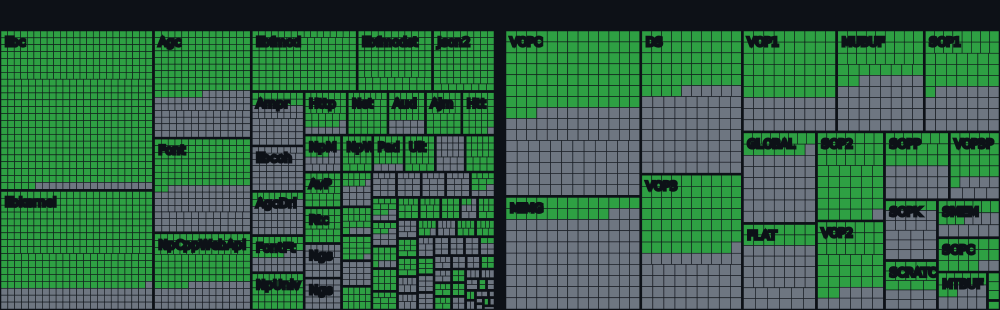
* System libraries: percentage of the functions known to the project so far (declared in core/libs/prx), not of every PS5 system function. The total grows as more functions are declared.
Unsupported or unexpected states strictly throw std::runtime_error. what() is printed to stderr and the process terminates.
The shader recompiler successfully produces SPIR-V (validated via Spirv-Tools when built with ANYPS5_ENABLE_SPIRV_TOOLS).
Compatibility
Per-game progress (stage reached, open blockers, libraries and GPU coverage) is tracked on the blocker map, a community project built from public GitHub data (source). Test reports go in the Game bring-up discussions, one thread per title.
Input mapping
SDL-mapped game controllers are supported, including analog sticks and triggers. Keyboard and mouse controls can be configured with an anyps5-input.ini file. See input mapping for the supported devices and configuration format.
Disclaimer
This project is intended for interoperability, research, preservation, and compatibility purposes. It does not include, distribute, or require copyrighted software, firmware, cryptographic keys, or proprietary libraries. Users are responsible for ensuring that any binaries used with this project are obtained and used in accordance with applicable laws and their respective license terms.
License
This project is licensed under the GNU General Public License version 2 only.