mirror of
https://github.com/manyfold3d/manyfold.git
synced 2026-10-22 03:32:18 -05:00

170 lines
9.4 KiB
Markdown
170 lines
9.4 KiB
Markdown
# Manyfold
|
|
|
|
<!-- ALL-CONTRIBUTORS-BADGE:START - Do not remove or modify this section -->
|
|
[](CONTRIBUTORS.md)
|
|
<!-- ALL-CONTRIBUTORS-BADGE:END -->
|
|
|
|
Manyfold is an open source, self-hosted web application for managing a collection of 3d models, particularly focused on 3d printing.
|
|
|
|
Visit [manyfold.app](https://manyfold.app/) for more details, installation instructions, and user and administration guides! Or, to have a go straight away, try our demo at [try.manyfold.app](https://try.manyfold.app).
|
|
|
|
## Help and Support
|
|
|
|
There are a few routes to get help:
|
|
|
|
* [GitHub issues](https://github.com/manyfold3d/manyfold/issues/new) is the best place to report bugs.
|
|
* [Live chat](https://matrix.to/#/#manyfold:matrix.org) to the "team" on Matrix (an open Discord/Slack-like chat system).
|
|
* Get in touch with our [social media](https://3dp.chat/@manyfold) presence in the Fediverse (Mastodon, etc).
|
|
|
|
And, if you want to contribute financially to development efforts...
|
|
|
|
[<img src="https://opencollective.com/manyfold/donate/button@2x.png?color=blue" alt="Donate with OpenCollective" width="20%" />](https://opencollective.com/manyfold/donate)
|
|
|
|
## Developer Documentation
|
|
|
|
Manyfold is open source software, and we encourage contributions! If you want to get involved, follow the guidance below, which explains how to get up and running. Then take a look at our [good first issue](https://github.com/manyfold3d/manyfold/labels/good%20first%20issue) tag for tasks that might suit newcomers to the codebase, or take a look at our [development roadmap](https://github.com/orgs/manyfold3d/projects/1).
|
|
|
|
### Application architecture
|
|
|
|
The application is built in [Ruby on Rails](https://rubyonrails.org), and tries to follow the best practices of that framework wherever possible. If you're not familiar with Rails, their [Getting Started](https://guides.rubyonrails.org/getting_started.html) guide is a good first introduction.
|
|
|
|
In general, Manyfold is a server-side app that uses plain old HTTP requests. We don't have any code using XHR, Websockets, or other more interactive comms yet (though could do in future).
|
|
|
|
The application consists of the application server itself, plus a background job runner using [Sidekiq](https://sidekiq.org/) for asynchronous tasks.
|
|
|
|
There are a few other major components that we build with:
|
|
|
|
* [Bootstrap 5](https://getbootstrap.com) provides the frontend CSS / JS
|
|
* [THREE.js](https://threejs.org/) (via TypeScript) is used for the client-side 3D rendering
|
|
* [Mittsu](https://github.com/danini-the-panini/mittsu), a Ruby port of THREE.js, is used for server-side 3D code
|
|
* [PostgreSQL](https://www.postgresql.org/) is the production database, though sqlite3 is used in dev
|
|
|
|
### Running locally
|
|
|
|
To run the app yourself, you'll need the following installed:
|
|
|
|
* Ruby 3.4
|
|
* Bundler 2.6+
|
|
* Node.js 24.13.0 (and run `corepack enable`)
|
|
* Yarn 3.8+
|
|
* Foreman or [another Procfile runner](https://github.com/ddollar/foreman#ports)
|
|
* [libarchive](https://github.com/chef/ffi-libarchive#installation) (for upload support)
|
|
* [imagemagick](https://imagemagick.org/index.php) (for image thumbnail generation)
|
|
* [ngrok](https://ngrok.com) (for ActivityPub development)
|
|
* [assimp](https://www.assimp.org) (for model file analysis)
|
|
|
|
To run the application once you've cloned this repo, you should be able to just run `bin/dev`; that should set up the database, perform migrations, install dependencies, and then make the application available at <http://127.0.0.1:3214>.
|
|
|
|
If you want to configure optional features, set the appropriate [environment variables](https://manyfold.app/sysadmin/configuration.html) in a file called `.env.development.local`. See `env.example` for a template file. Note that the required environment variables in the documentation are not needed in development mode, due to the use of SQLite instead of PostgreSQL.
|
|
|
|
#### ngrok
|
|
|
|
Running `bin/dev` also expects to be able to start a pre-configured [ngrok](https://ngrok.com) tunnel called "manyfold", to enable ActivityPub federation in development. If you don't want to use this, you can remove the line from `Procfile.dev`, though please don't commit it!
|
|
|
|
To configure the tunnel, add this to your [ngrok config file](https://ngrok.com/docs/agent/config/):
|
|
|
|
```yaml
|
|
endpoints:
|
|
- name: manyfold
|
|
url: https://{your-ngrok-url-here}
|
|
upstream:
|
|
url: 3214
|
|
```
|
|
|
|
### Using the Devcontainer
|
|
|
|
To simplify the development environment setup, Manyfold includes a devcontainer configuration. This allows you to use Visual Studio Code's Remote - Containers extension to develop inside a container.
|
|
|
|
#### Prerequisites
|
|
|
|
- Docker installed on your machine
|
|
- Visual Studio Code with the Remote - Containers extension
|
|
|
|
#### Steps
|
|
|
|
1. Clone the repository:
|
|
```sh
|
|
git clone https://github.com/manyfold3d/manyfold.git
|
|
cd manyfold
|
|
```
|
|
|
|
2. Open the repository in Visual Studio Code:
|
|
```sh
|
|
code .
|
|
```
|
|
|
|
3. When prompted by Visual Studio Code, click on "Reopen in Container". This will build the devcontainer and open the project inside it.
|
|
|
|
4. Once the container is running, you can use the integrated terminal in Visual Studio Code to run commands as usual.
|
|
|
|
### Coding standards
|
|
|
|
[](https://app.codacy.com/gh/manyfold3d/manyfold/dashboard)
|
|
|
|
We use [Rubocop](https://rubocop.org/) to monitor adherence to coding standards in Ruby code. We use [StandardRB](https://github.com/standardrb/standard) rules along with some other rulesets for specific libraries and frameworks.
|
|
|
|
You can run the linter with `bundle exec rubocop`.
|
|
|
|
We also have linters for ERB and Typescript files. You can run these with: `bundle exec erb_lint --lint-all` and `yarn run lint:ts` respectively.
|
|
|
|
Code linting is automatically performed by our GitHub Actions test runners, but if you set up [Husky](https://typicode.github.io/husky/get-started.html), it will also execute as a pre-commit hook.
|
|
|
|
### Testing
|
|
|
|

|
|
[](https://app.codacy.com/gh/manyfold3d/manyfold/dashboard)
|
|
|
|
We want to produce well-tested code; it's not 100%, but we aim to increase test coverage with each new bit of code.
|
|
|
|
You can run the test suite as a one off with the command `bundle exec rake`, or you can start a continuous test runner with `bundle exec guard` that will automatically run tests as you code.
|
|
|
|
Tests are run automatically when pushed to our repository using GitHub Actions.
|
|
|
|
Generation of screenshots for the documentation is made with system specs and is not run by default.
|
|
To generate screenshots, set `DOC_SCREENSHOT=true`:
|
|
|
|
```sh
|
|
# All specs and documentation
|
|
DOC_SCREENSHOT=true bundle exec rspec
|
|
# Only documentation specs
|
|
DOC_SCREENSHOT=true bundle exec rspec -t @documentation
|
|
```
|
|
|
|
|
|
### Internationalisation & Translation
|
|
|
|
Manyfold uses [Rails' I18n framework](https://guides.rubyonrails.org/i18n.html) to handle all text content.
|
|
|
|
You can check the validity of locale files with `bundle exec i18n-tasks health`. This is also run as part of our test pipeline, so will be enforced on new code.
|
|
|
|
Translations are also available in client-side Javascript; they are built from the Rails locale files as part of the asset pipeline, using [i18n-js](https://github.com/fnando/i18n-js). If you need to run an export manually, do `bundle exec i18n export -c config/i18n-js.yml`.
|
|
|
|
We are using [Translation.io](https://translation.io/) to manage translations into other languages. If you want to help out on that, sign up on the site and send us username on a GitHub issue for the language you're interested in.
|
|
|
|
To synchronise with Translation.io, run `rake translation:clobber_and_sync:{locale}` where `{locale}` is a supported code, such as `de`.
|
|
|
|
### Building Docker images
|
|
|
|
[](https://depot.dev?utm_source=manyfold)
|
|
|
|
The application is distributed as a multi-platform docker image (built by [Depot](https://depot.dev/)); see our [Docker Compose instructions](https://manyfold.app/get-started/docker) for full details.
|
|
|
|
If you want to build your own version of the Docker image, you can do so by running ` docker build -f docker/default.dockerfile .` in the root directory of this repository.
|
|
|
|
## Funding
|
|
|
|
This project is funded through [NGI0 Entrust](https://nlnet.nl/entrust), a fund established by [NLnet](https://nlnet.nl) with financial support from the European Commission's [Next Generation Internet](https://ngi.eu) program. Learn more at the [NLnet project page](https://nlnet.nl/project/Personal-3D-archive).
|
|
|
|
[<img src="https://nlnet.nl/logo/banner.png" alt="NLnet foundation logo" width="20%" />](https://nlnet.nl)
|
|
[<img src="https://nlnet.nl/image/logos/NGI0_tag.svg" alt="NGI Zero Logo" width="20%" />](https://nlnet.nl/entrust)
|
|
|
|
This project is also funded by you! Make a donation to support long-term development at OpenCollective:
|
|
|
|
[<img src="https://opencollective.com/manyfold/donate/button@2x.png?color=blue" alt="Donate with OpenCollective" width="20%" />](https://opencollective.com/manyfold/donate)
|
|
|
|
## Popularity
|
|
|
|
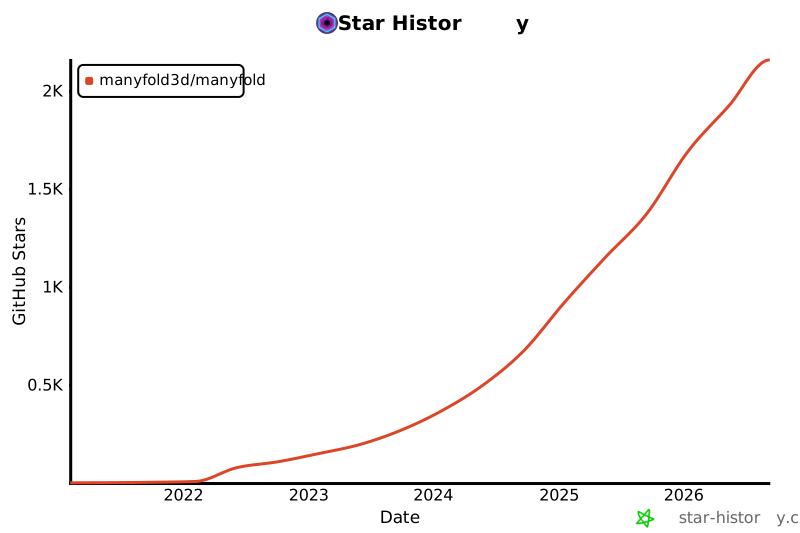
Down the bottom because they're cool, but not important, here are some stats!
|
|
|
|
[](https://star-history.com/#manyfold3d/manyfold&Date)
|